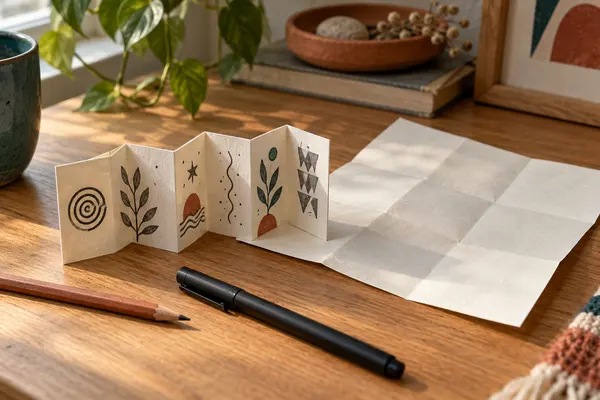
- Fold in eighths
- Cut once
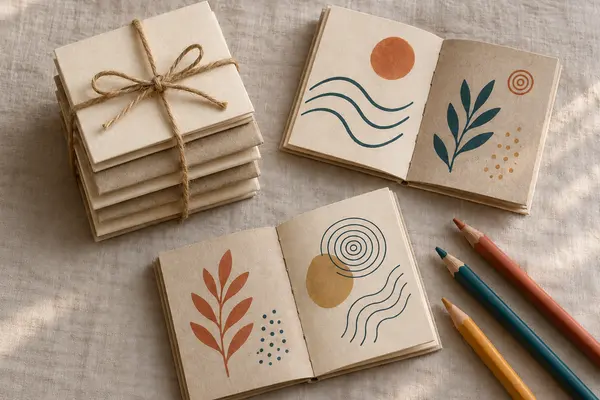
- Doodle freely
- No glue, no staples
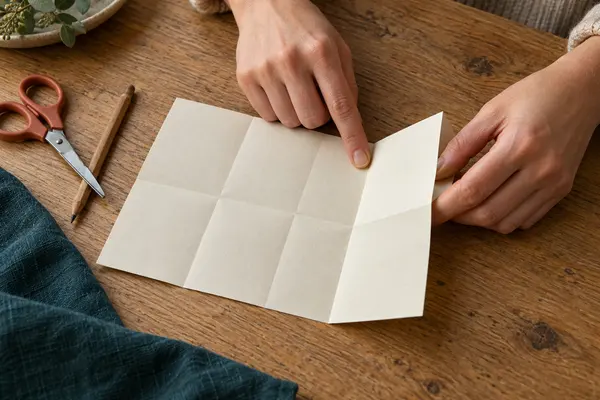
STEP ONE
Fold it
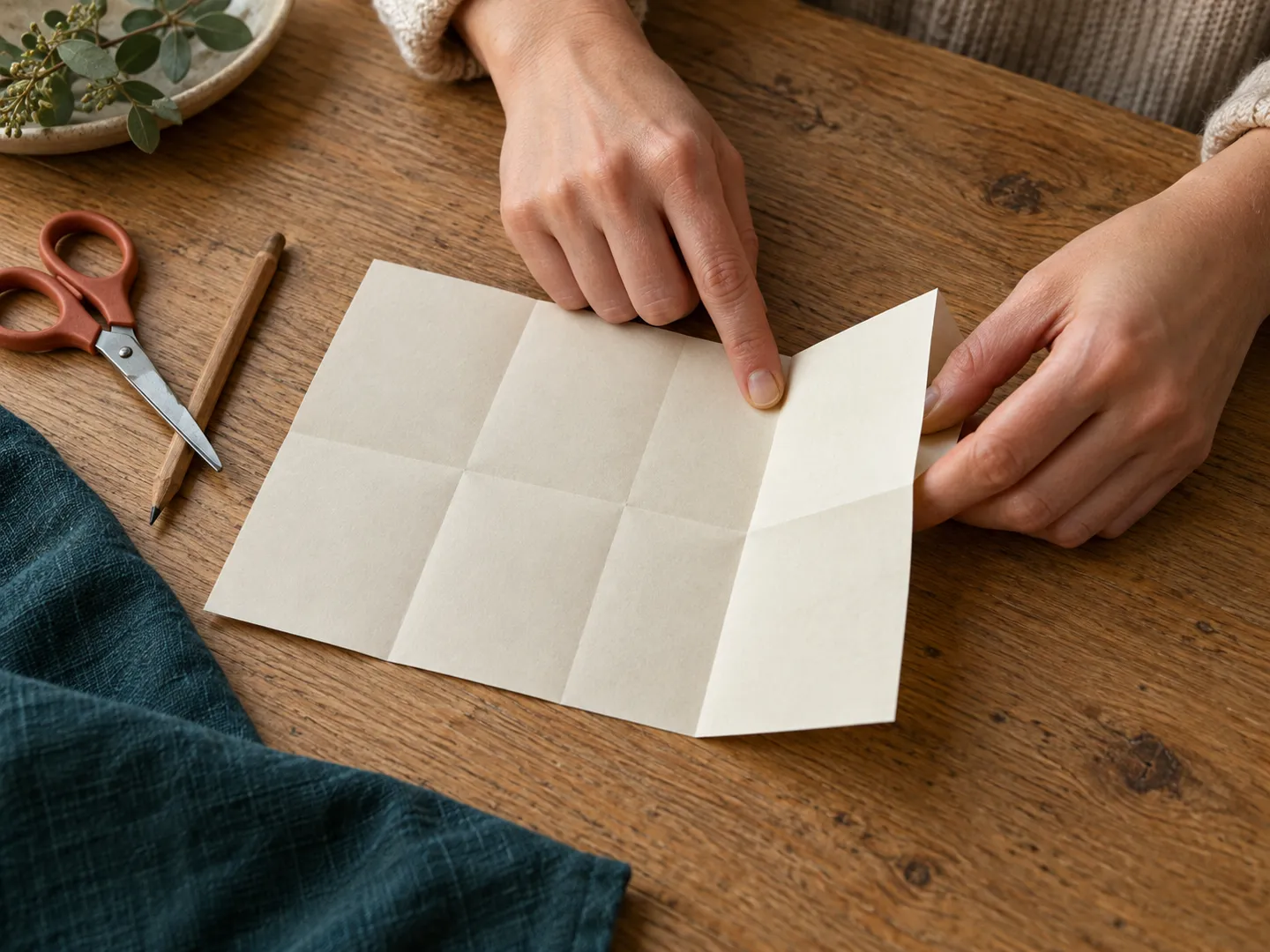
Crease one sheet into eight equal panels, cut halfway along the middle, and push it into shape.
See the folds doodlebooklet
Updated
A FIVE-MINUTE PAPER PROJECT
A doodle booklet needs no glue, no staples and no printer.
Fold a single sheet into eighths, make one cut, and it becomes a tiny eight-page book: somewhere to doodle during a call, keep a list, or make a mini comic. Here is how, with the paper maths and the research on doodling.
Plain English, with the sources linked.
ONE CUT eight pages
Fold one now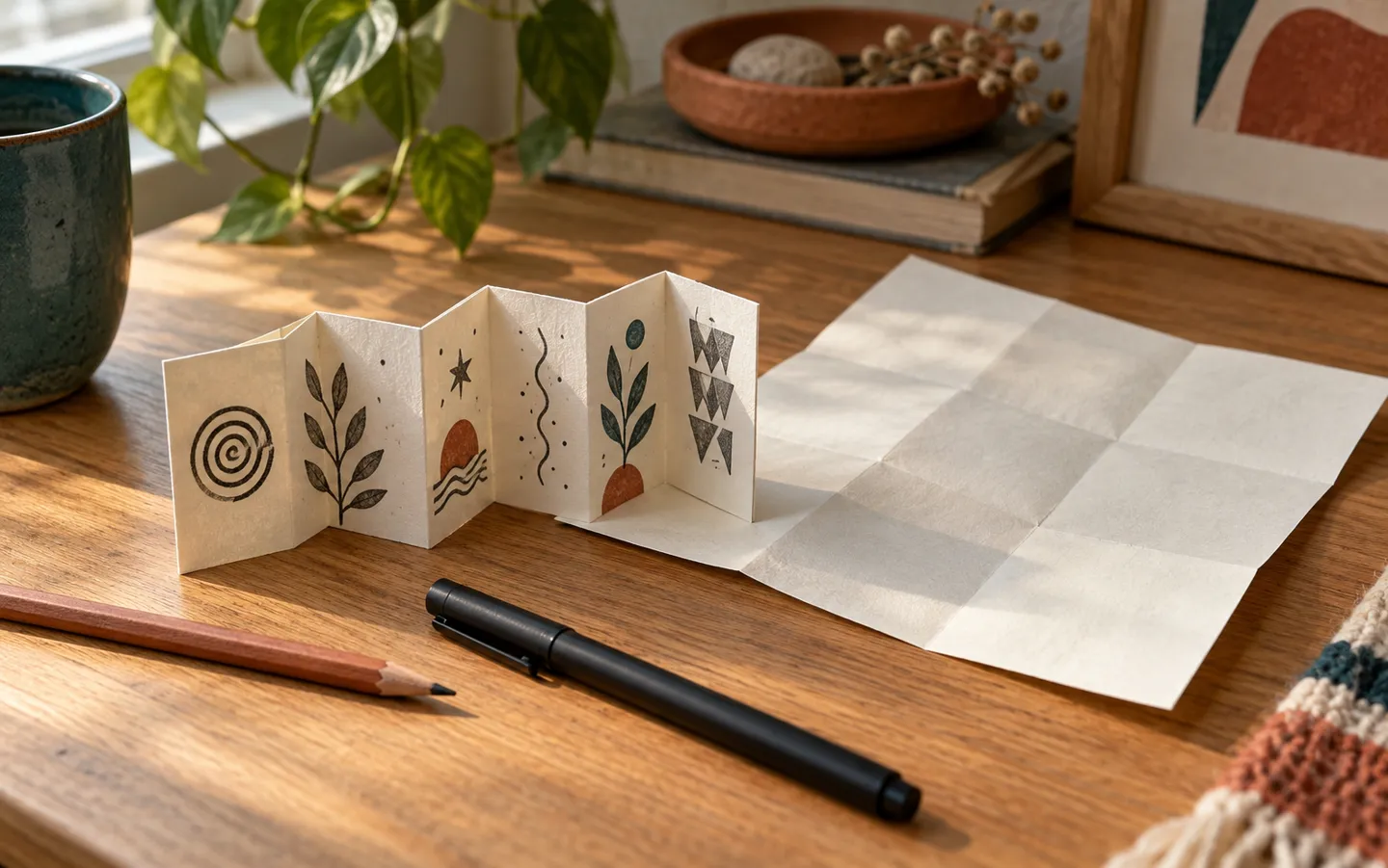
THE IDEA
A whole book from the paper
already in your printer tray.
STEP ONE
Crease one sheet into eight equal panels, cut halfway along the middle, and push it into shape.
See the foldsSTEP TWO
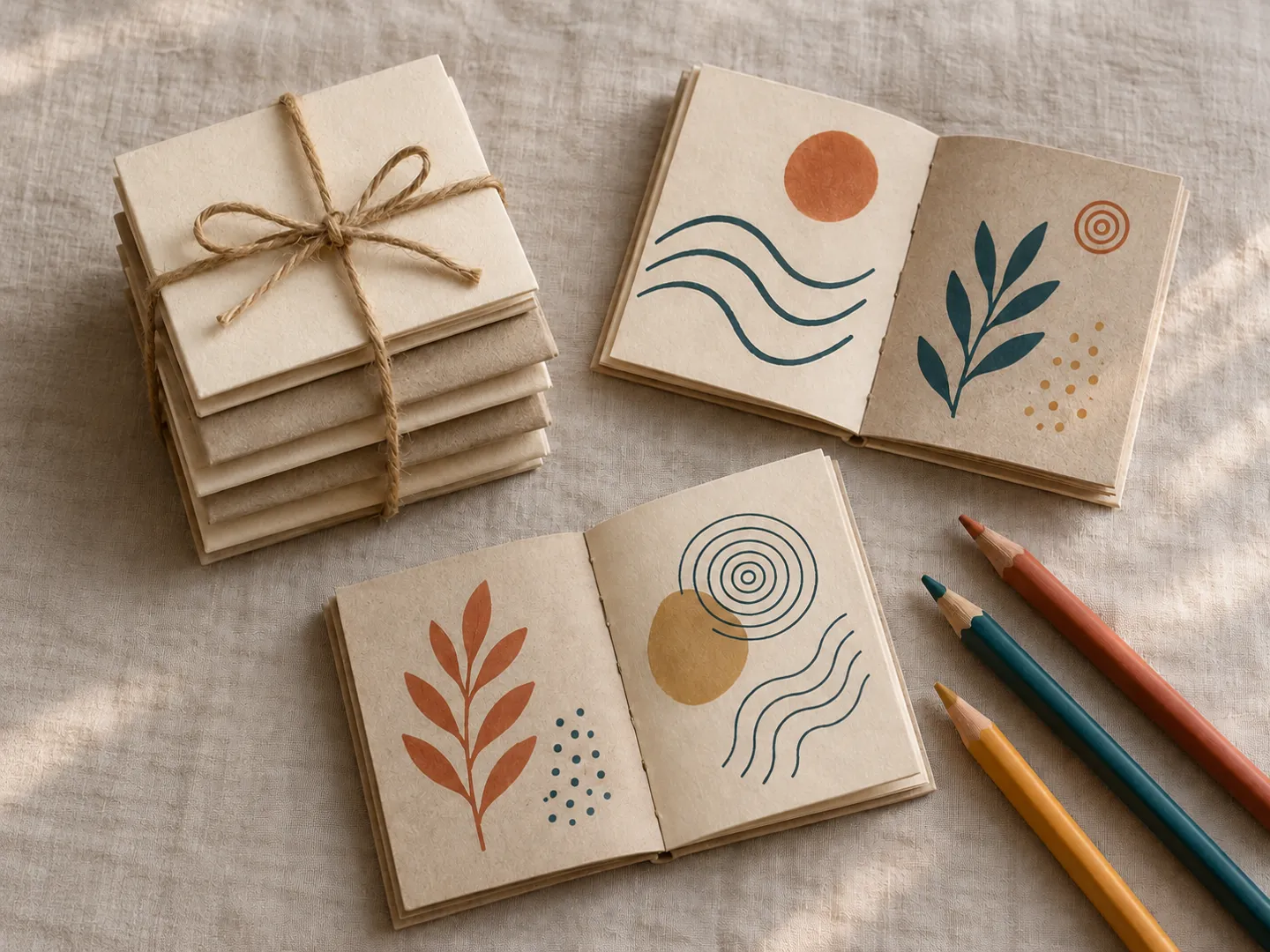
Doodles, lists, a tiny comic. Doodling while you listen may even help you remember.
See the studiesSTEP THREE
Each booklet weighs about 5 grams. Stack them, post them, or recycle the paper when you are done.
Paper factsA QUICK SIZE CHECK
Pick the sheet you start with. Folding it into eight panels halves it three times, and in the A series each halving gives the next size down, so an A4 sheet makes A7 pages.
Sizes are rounded to the millimetre. Weights assume ordinary 80 g/m² printer paper.
TWO STUDIES WORTH KNOWING
Doodling is often seen as not paying attention.
The research is kinder to it.
+29%
Recalled in a surprise test
Forty people listened to a dull two-and-a-half-minute phone message. Those who shaded shapes while listening recalled 29% more information afterwards than those who only listened: on average 5.3 names against 4.3.
DOODLE WHILE YOU LISTEN · 2010
2× or more
Words recalled, drawn vs written
In University of Waterloo experiments, people often recalled more than twice as many words they had drawn as words they had written out, and a drawing advantage showed up even with just four seconds to draw.
DRAW IT, DON'T WRITE IT · 2016
Neither study needed artistic skill. Simple shapes and quick sketches were enough, which is exactly what a booklet's small pages invite.
FOLD ONE NOW
Fold the sheet in half lengthways, then across in half twice more. Unfold: you should see eight equal panels.
Fold it in half across. From the folded edge, cut along the middle crease only to the halfway point. Both outer edges stay whole.
Open it out, fold it lengthways again, and push the ends together so the cut opens into a diamond. Fold the pages flat around the cover.
Keep doodles small and simple: one pattern, list or sketch per page. Keep a booklet by you for long calls or talks.
PAPER FACTS
The A series starts with A0, which has an area of one square metre. Every A size has the same height-to-width ratio, the square root of two, about 1.414 to 1.
Cut any A sheet in half parallel to its short side and you get the next size down: A4 halves into A5, A5 into A6. That is why your folded pages keep the same proportions as the sheet.
These sizes were adopted as the German standard DIN 476 in 1922, and later became the international standard ISO 216, now used in most countries.
Ordinary printer paper weighs 80 g/m². Since A4 is one sixteenth of a square metre, one sheet, and so one finished booklet, weighs about 5 grams.
Recycling shortens paper fibres each time. Citing the US EPA, Oregon State University notes they can be recycled about five to seven times before they are too short to reuse.
QUICK QUESTIONS
Short answers to the questions people ask most.
How do you make an eight-page booklet from one sheet?
Fold the sheet in half lengthways, then fold it into eighths and unfold. Fold it in half across, cut along the middle crease from the folded edge to the halfway point, open it out, fold it lengthways again and push the ends together so the cut opens into a diamond. Fold the pages flat into a little book.
How big are the pages if I use A4?
An A4 sheet is 210 × 297 mm. Folding it into eight equal panels gives pages of about 74 × 105 mm, which is the A7 size, because every halving of an A-series sheet gives the next size down.
What paper works best?
Ordinary 80 g/m² printer paper folds cleanly and is easy to cut. Thicker paper or card can crack along the folds and makes the finished booklet bulky, so test one sheet first.
Does doodling really help you remember?
In a 2010 study, people who shaded shapes while listening to a dull phone message recalled 29% more information in a surprise test than people who just listened. Other studies found that drawing a word helps people recall it better than writing it.
Can I recycle my booklets?
Plain paper booklets can normally go in paper recycling. Each time paper is recycled its fibres get shorter, and the US Environmental Protection Agency has said they can be recycled about five to seven times.
A NAME WORTH FOLDING
doodlebooklet.com is part of the DoodleSale portfolio. It isn't in an auction right now, but you can ask about leasing it.